
KompraConf 2026: the panel on artificial intelligence
40 minutes on AI in finance: a panel with banks, a supervisor and a data provider at KompraConf 2026.
- Date
- 21 August 2026
- Venue
- Astana, the AIFC venue
- Role
- Panel moderator
- On stage
- Four panellists
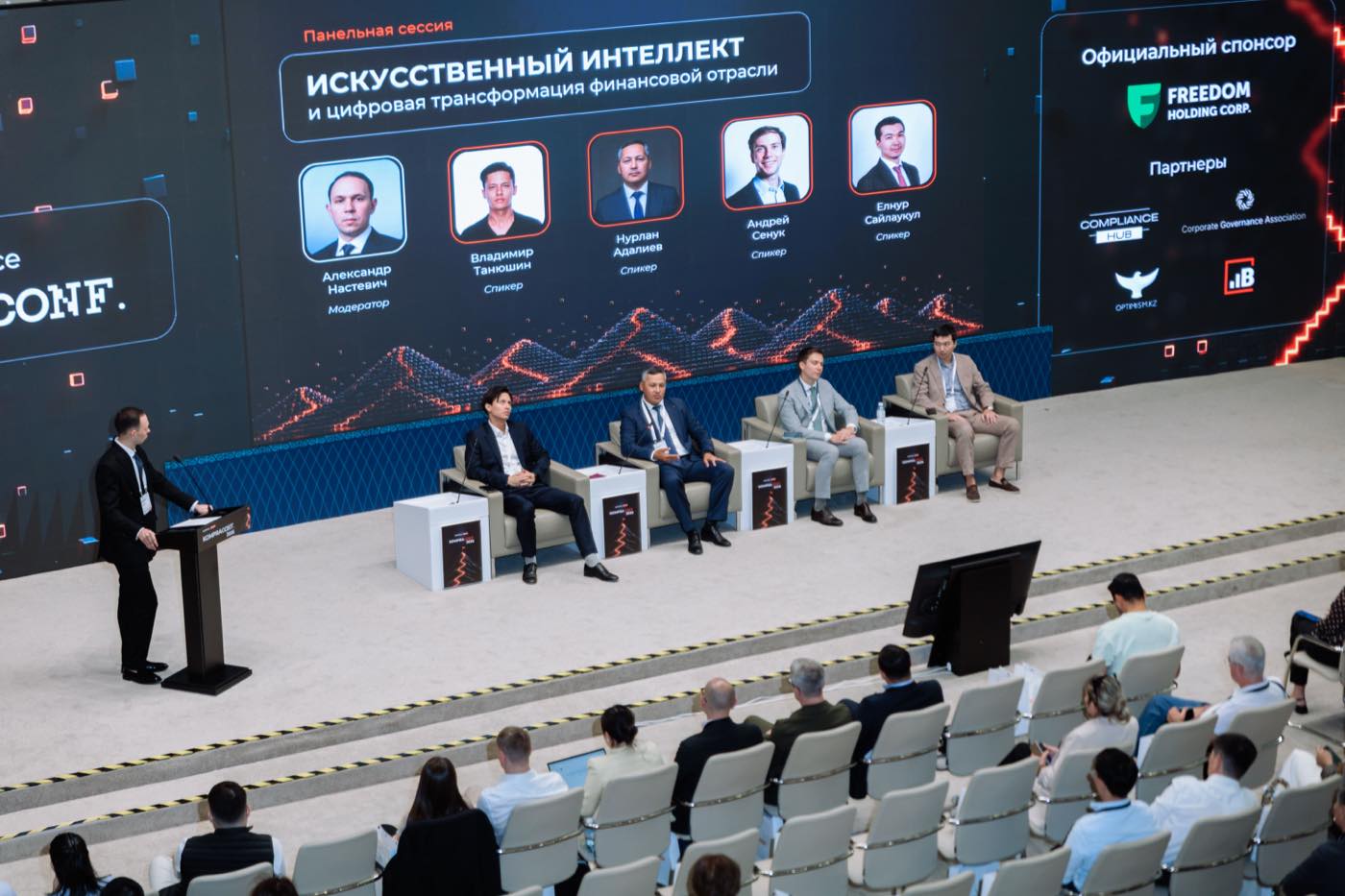
Who was on the panel
- Vladimir Tanyushin, head of the credit risk assessment centre at Bank CenterCredit
- Nurlan Adaliyev, director of the financial crime department at the AIFC Committee
- Andrey Senuk, director for Risk & Compliance at Dow Jones in Central Asia, the Caucasus and Eastern Europe
- Yelnur Sailaukul, head of risk management and board member at Freedom Bank Kazakhstan
Two numbers, and a show of hands
The session opened with two figures. Three quarters of Kazakhstan's banks already use artificial intelligence, according to the Agency for Regulation and Development of the Financial Market. Across the region's financial sector as a whole, only two per cent have reached full-scale adoption. The topic of the session sat between those two numbers, because the question has long stopped being whether the algorithm works.
The question is what has to be built around it, so that a decision made by a model can be explained to the customer, defended in front of the supervisor and signed off by a named person.
Andrey Senuk checked the figures against the room and asked for a show of hands. Around 45 per cent of the audience said they already use artificial intelligence, which matched the AIFC review of authorised firms almost exactly. When he asked who uses a system built specifically for compliance rather than a general assistant, a handful of hands stayed up.
What is already left to the algorithm
The warm-up question was the same for everyone: name one process you have handed to an algorithm and no longer revisit, and one you would not hand over under any circumstances.
Bank CenterCredit has automated the inbound line, where the first answer to a customer comes from a model, and keeps corporate underwriting with people. Freedom Bank Kazakhstan named scoring, and compliance and anti-fraud in part, while the scoring model itself stays too critical to be left alone. Both the AIFC Committee and Dow Jones answered from the other side: artificial intelligence does the first pass, the screening, the collection of data and the drafts, and wherever regulatory responsibility appears, the decision stays with a person.
The bank: where the effect showed up
For Bank CenterCredit the clearest effect came in credit scoring, and Vladimir Tanyushin pointed to the National Bank's statistics on loan portfolio quality. Where the effect fell short was in the more volatile industries: nobody aggregates market-wide data there, so there is less statistics to learn from. His summary stayed with the session: if you have no data, you have no model, and artificial intelligence will not help you either.
Yelnur Sailaukul described what a new scoring model has to show before it is allowed anywhere near customers. First, it has to meet the regulator's requirements, which tighten every year and which a new model can quietly miss. Second, a backtest on historical data, because approval rate and default rate can look good for the wrong reason: move the cut-off and the approval rate rises while the default rate stays where it was. Third, validation by a separate unit, which the bank set up on purpose, and only after its sign-off does the model go live.
Andrey Senuk brought the view from markets that went through this earlier. A McKinsey survey from 2025 showed 88 per cent of firms adopting artificial intelligence and a small share actually getting an effect from it, and the report itself was mostly about the mistakes of the rest. In Europe the supervisor insists on two things: a person makes the final decision, and the methodology survives the project, so that whoever comes later can explain what the model does and why it rated a counterparty the way it did.
Compliance and AML: quality, not the number of alerts
Nurlan Adaliyev set out four things that decide whether a system finds risk or merely produces alerts. The quality of the input data, because a thin customer profile decides the outcome before any model starts. The scenarios, which keep developing along with international typologies. The investigation itself, because an alert is the beginning of a case for the financial intelligence unit, not an incident to be closed. And the feedback loop, the return to the system after communication with the authority, without which the model goes stale. He referred to the Financial Stability Board report of 30 June 2026: the question is no longer whether you use artificial intelligence, but how, and responsibility stays with the firm.
On the other side of the same picture, Andrey Senuk described manipulation of the source data: articles cleaned up, sites replaced, search engines told which source is the real one. In Kazakhstan he sees a second front, the checking of goods and their codes inside contracts and payments, because the code can be hidden in the payment purpose. And the oldest problem of all, false positives on politically exposed persons, is what pushes firms towards agentic systems that learn from previous decisions.
Freedom Bank Kazakhstan built its own platform for this. It connects to external registers and sanctions lists, agents request documents from the customer and parse them, and heuristics work alongside machine learning, with neural networks switched on only where they are needed. The customer ends up in a green, amber or red zone; most land in green and pass the standard route, while the compliance officers' attention goes to the red one. Yelnur Sailaukul tied the audit trail to the group's obligations as a listed company: the controls are examined every year.
Digital assets and the digital tenge
Since 1 May digital assets have had systemic regulation, and the country now has two circuits, the general one and the AIFC. In practice, Nurlan Adaliyev said, the checks themselves do not change much: the profile, the geography, the sanctions exposure, the source of funds. What is added is blockchain analytics, the history of a wallet and whether it has touched mixers, bridges or DeFi protocols, plus transaction monitoring after onboarding, where a changing IP address is enough of a reason to look again. He pointed at the FATF targeted review of Recommendation 15 published in July 2026: the international question is no longer whether providers are licensed, but how effectively the whole ecosystem works, including the unlicensed part.
The digital tenge turned out to be the most cautious part of the conversation. For a bank lending to contractors, Vladimir Tanyushin said, there is no new risk data yet: volumes are small, and a recipient in a village with patchy internet will convert the money into cash at the first opportunity, which ends the traceability. What already works is narrower and real: control over the intended use of budget money, and a level of transparency a citizen can follow.
How it ended
The closing question asked what cannot be put off until next year. Vladimir Tanyushin said learning, and added a rule worth keeping: do not use artificial intelligence where a calculator is enough. Nurlan Adaliyev quoted a forecast that in ten years the market will split into those who learned to use it and those left without work, and said the learning has to be risk-based. Andrey Senuk put it as investment in two things at once, in people and in the systems that genuinely help. Yelnur Sailaukul kept it to one line: do not miss the moment.
The session closed on the thought it opened with. Technology is available to everyone, and it guarantees nothing on its own: it amplifies what is already inside the firm, making good processes faster and bad ones wrong at the same speed. Kazakhstan is at the stage where these rules are still being written, which is a rare chance to build the controls around the model at the same time as the model.
How it looked
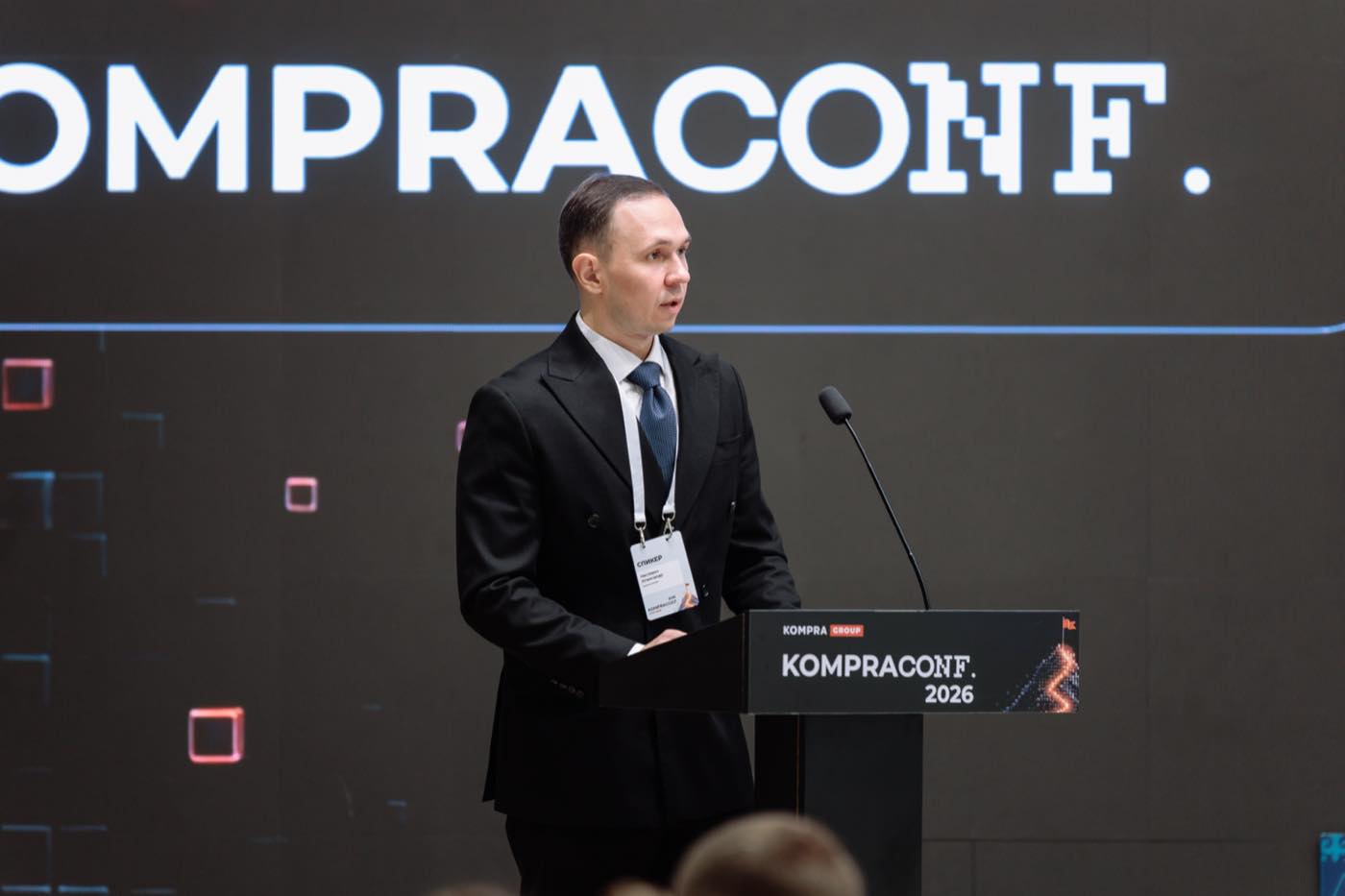
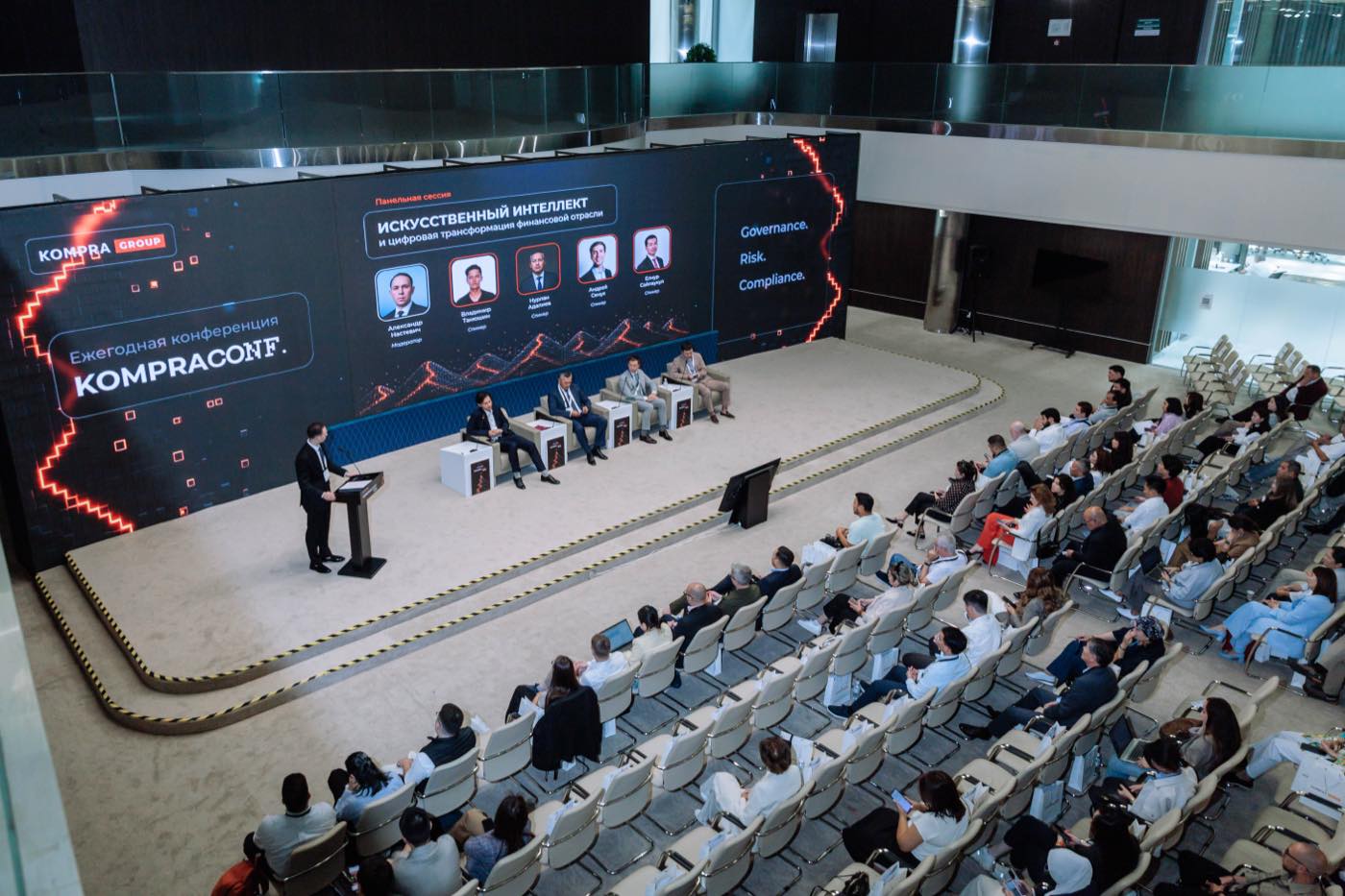
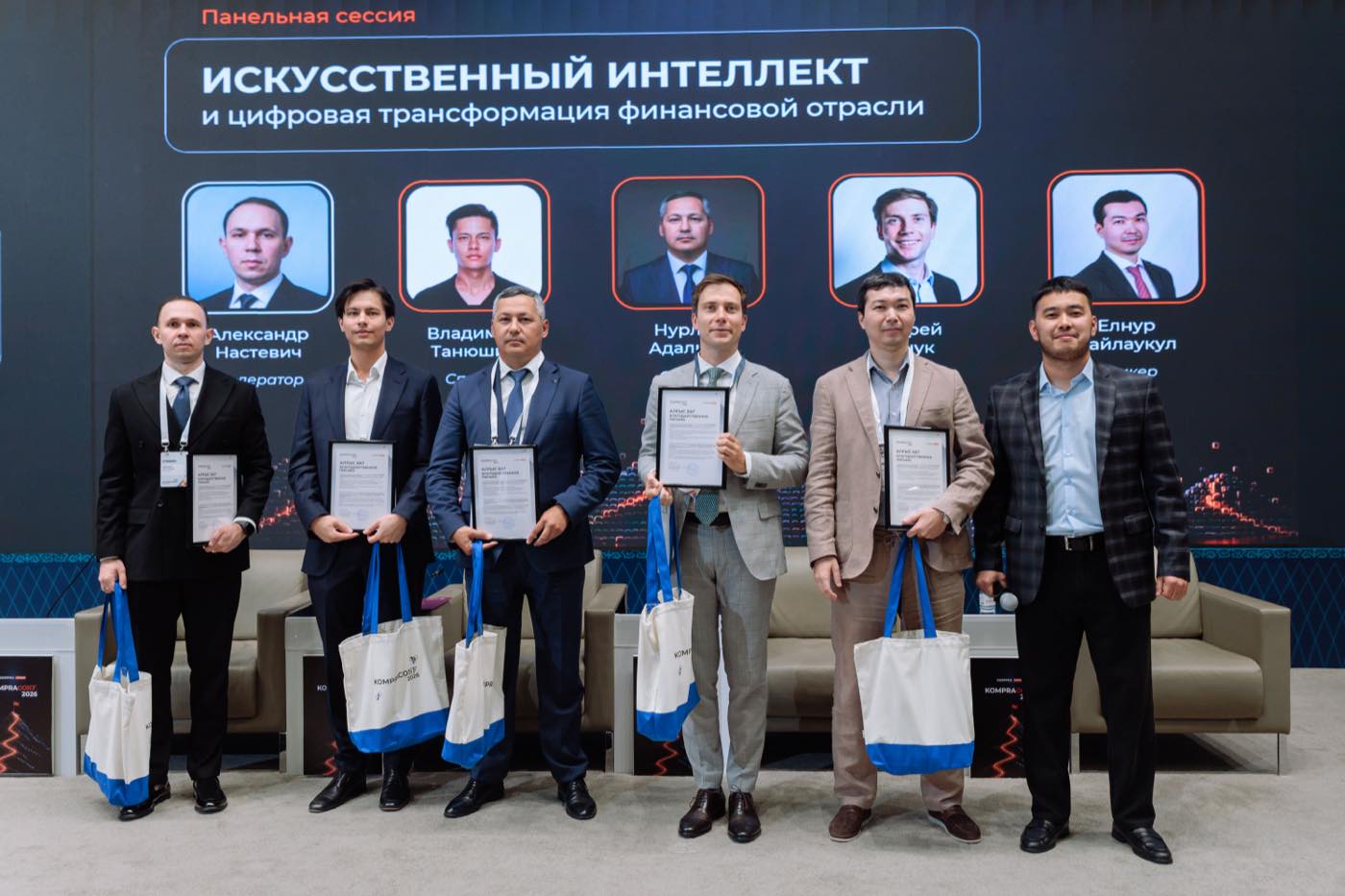
This is a report from a public event. The figures and assessments are as of August 2026, and the sources are named in the text.
Facing the same questions?
Tell us what is going on. We will work out where to start.
Book a consultation